Understanding massage
Dry cupping and wet cupping: why the name alone is not enough
Similar names can describe different procedures. Ask what will actually happen to your skin before making an appointment.
The short answer
What to remember
- Dry cupping uses suction without intentional cuts or bloodletting; wet cupping is a different procedure.
- Vela Spa offers dry cups as part of a massage, not wet cupping.
- Ask about hygiene, possible marks and health suitability without relying on treatment claims.
Ask about the procedure, not just its name
When searching for cupping or hijama, you may encounter similar names for services performed differently. The key distinction is what happens to the skin: dry cupping uses suction without intentional cuts or bloodletting, while wet cupping involves puncturing or making small cuts to draw blood. A name alone does not tell you which procedure is planned.
Vela Spa's cupping service uses dry cups as part of massage, without cuts or bloodletting. If you are looking for wet cupping, that is not the service described here. Read the details and ask the team to explain anything unclear before confirming, so the appointment matches your expectations.
What dry cups can feel like
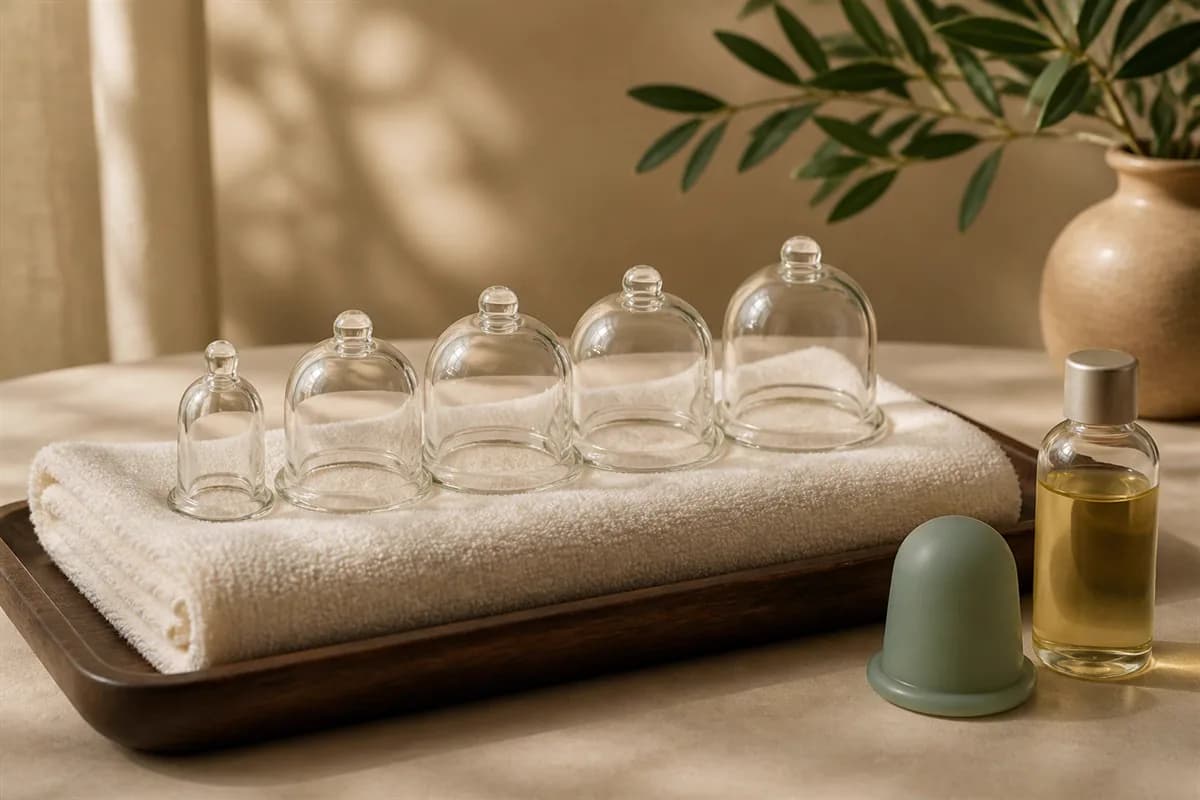
A cup creates suction on the skin, which may feel like pulling and can leave a change in colour. Sensation varies with the area and suction. Ask the specialist to explain the process before starting, and say if you feel uncomfortable. You can ask to stop or exclude an area you do not want treated.
Visible marks may appear and their fading time cannot be guaranteed. Consider that possibility if you have an upcoming event or clothing that reveals the area. No intentional cuts does not mean there is no possibility of marks or irritation, and a visible mark does not call for stronger suction.
Hygiene matters for both
Procedures involving blood have different considerations from those without it, but clean equipment matters in both. Ask how the cups are cleaned and prepared between appointments. NCCIH notes that equipment contaminated with blood can transmit bloodborne disease if reused without appropriate sterilisation.
Do not accept equipment that appears dirty, and ask for clarification if the cleaning process is unclear. Tell the team about product sensitivities and any wound, inflammation or injury in the proposed area. Cups should not be applied to injured skin. Clear answers help you decide before the appointment begins.
Know the limits of the evidence
Similar names do not establish that a session treats disease or removes toxins. NCCIH reports that most cupping research is low quality, evidence for pain relief is not strong enough for firm conclusions, and there is not enough high-quality research to reach conclusions about other conditions.
You can choose dry cupping as a wellness experience after understanding suction and the possibility of marks, but it does not replace diagnosis or prescribed care. A mark is neither a success score nor evidence that harmful substances have left the body. Discuss persistent pain with a health professional.
Check suitability and prepare questions
Seek health advice before booking if you bruise easily, have a bleeding disorder or take medication affecting bleeding. Skin conditions, pregnancy, the postpartum period, recent surgery and unexplained swelling also warrant advice about suitability. Do not use suction on a painful or inflamed area to discover the cause of symptoms.
NCCIH lists potential effects including burns, infection, scarring and discolouration. Seek assessment for increasing pain, blisters or discharge. Before confirming, ask whether the service is dry or wet, where cups will be placed and how they are cleaned. Check the current price, duration and availability for your Riyadh address.
Quick answers
Frequently asked questions
Is Vela Spa's cupping wet cupping?
No. It is dry cupping as part of massage, without cuts or bloodletting.
Can dry cups leave marks?
Suction may leave visible skin discolouration, and no precise fading time can be guaranteed.
Do marks show that toxins have left?
No. Marks do not prove detoxification or demonstrate that the session succeeded.
Can cupping replace pain treatment?
It does not replace assessment or prescribed care, and current evidence does not support strong treatment promises.
Editorial sources
Health-related statements were checked against the following public guidance. Links open the original publisher.
Know your service
Explore dry cupping
Review the session and discuss hygiene, areas and possible marks before confirming.